Skin problems are one of the most common reasons people seek medical advice. A rash, dry patch, persistent itch or change in skin texture can be uncomfortable, frustrating and sometimes worrying. Many people try creams from the pharmacy first, but when the skin does not improve, or when symptoms keep returning, it is important to understand what may be causing the problem.
Two of the most common long term inflammatory skin conditions are eczema and psoriasis. They can look similar at first because both may cause dry, red, itchy, flaky or discoloured patches of skin. However, they are not the same condition. They often appear in different areas of the body, feel different on the skin and usually need different management.
At Niva Medical Clinic, we support patients across North West London with personalised, patient centred care for everyday health concerns, including skin conditions. Our private GP services are designed to complement NHS care by offering accessible appointments, continuity and practical advice for people who want timely medical support.
What Is Eczema?
Eczema is a term used for a group of conditions that cause inflammation of the skin. The most common type is atopic eczema, also known as atopic dermatitis. It is often linked with a sensitive skin barrier and may be associated with allergies, asthma or hay fever.
Eczema usually causes intense itching. The skin may become dry, rough, cracked, red, brown, grey or darker than the surrounding skin, depending on your skin tone. In some cases, the affected area may become bumpy, swollen, weepy or crusted, especially during a flare up. Long term scratching can make the skin thicker and more leathery.
Eczema often appears in areas where the body bends. These include the inside of the elbows, behind the knees, around the wrists, ankles, neck and hands. In babies and young children, it may also affect the face and scalp.
The itch is often the most difficult symptom. It may disturb sleep, affect concentration and create a cycle where scratching damages the skin barrier further, making the eczema worse.
What Is Psoriasis?
Psoriasis is a chronic inflammatory condition linked to the immune system. It causes skin cells to build up more quickly than usual, leading to thickened patches of skin called plaques.
Psoriasis often appears as raised, clearly defined patches covered with silvery white, grey or flaky scales. On lighter skin, the patches may look pink or red. On darker skin, they may look purple, brown, grey or darker than the surrounding skin. Psoriasis can itch, but many people describe the sensation as burning, soreness, tenderness or stinging rather than a simple itch.
Psoriasis commonly affects the elbows, knees, scalp and lower back. It may also affect the palms, soles, nails and skin folds. Scalp psoriasis can sometimes be mistaken for dandruff or seborrhoeic dermatitis, especially when scaling is the main symptom.
Unlike eczema, psoriasis plaques often have sharper edges. The skin may crack or bleed, particularly if the plaques are scratched or if they develop over joints.
How to Tell Whether It Is Eczema or Psoriasis
The fastest way to separate eczema from psoriasis is to look at the sensation, appearance and location of the rash.
Eczema is usually dominated by itch. The rash may be less clearly defined and may appear dry, inflamed, bumpy, crusted or weepy. It often appears in skin creases, such as behind the knees or inside the elbows.
Psoriasis is usually more structured in appearance. The plaques are often thicker, raised and more clearly outlined. They are commonly covered with silvery, white or grey scaling and often affect the elbows, knees, scalp and lower back.
Age can also give a clue. Eczema often starts in childhood, although adults can develop it too. Psoriasis commonly begins in adolescence or adulthood, though it can appear at almost any age.
These differences are helpful, but they are not a substitute for a medical assessment. Some people have features of both conditions. Other skin problems can also mimic eczema or psoriasis, including fungal infections, allergic reactions, contact dermatitis, seborrhoeic dermatitis and rosacea.
What Are the First Signs of Eczema?
The first signs of eczema often include dry, sensitive or itchy skin. The area may become rough, red, darker, lighter or inflamed. In some people, small bumps appear before the skin becomes cracked or flaky.
The itch can be severe and may become worse at night. Scratching can lead to bleeding, crusting or infection. If the skin becomes hot, painful, swollen or starts oozing yellow fluid, it is important to seek medical advice as this may suggest infection.
Eczema may flare after contact with irritants such as soaps, detergents, fragrances, cleaning products, wool, sweat or cold weather. Stress, illness and environmental changes can also contribute to flare ups.
Food can be a trigger for some people, particularly children with known food allergies, but there is no universal eczema diet. Removing foods without proper medical advice can be unhelpful and may cause nutritional problems. If you suspect a food related pattern, it is better to discuss it with a clinician rather than starting a restrictive diet on your own.
What Are the First Signs of Psoriasis?
Psoriasis may begin as small raised bumps or patches that gradually become larger and more scaly. The affected skin may feel dry, tight, sore or uncomfortable. Over time, plaques may become thicker and more noticeable.
Scalp psoriasis may appear as persistent flakes, thick scale or itchy patches on the scalp. It can be mistaken for dandruff, but the scaling is often thicker and may extend beyond the hairline.
Nail changes can also occur in psoriasis. These may include small dents in the nails, thickening, lifting of the nail from the nail bed or changes in nail colour. Some people with psoriasis also develop joint pain, swelling or morning stiffness. This is important because psoriasis can sometimes be linked with psoriatic arthritis, which needs medical assessment.
Other Common Skin Conditions That Can Look Similar
Not every red or flaky rash is eczema or psoriasis. Several common skin conditions can overlap in appearance, which is why diagnosis matters.
Rosacea usually affects the face. It may cause flushing, redness, visible small blood vessels, spots, burning or sensitive skin. It often affects the cheeks, nose, chin and forehead. Some people notice that symptoms are triggered by alcohol, spicy food, hot drinks, sunlight, stress or temperature changes.
Seborrhoeic dermatitis is a common inflammatory skin condition that often affects oily areas such as the scalp, eyebrows, sides of the nose, ears and chest. It can cause white or yellowish flakes, redness and irritation. On the scalp, it may look like persistent dandruff.
Contact dermatitis occurs when the skin reacts to something it has touched. This may be an irritant, such as soap or cleaning chemicals, or an allergen, such as nickel, fragrance, hair dye or certain skincare ingredients. The rash often appears where the substance contacted the skin.
Fungal infections can also cause itchy, red or scaly patches. They may have a ring shaped appearance and can spread if treated incorrectly. This is one reason why persistent rashes should not simply be treated with steroid creams without a proper assessment.
When Should You See a Doctor About a Skin Rash?
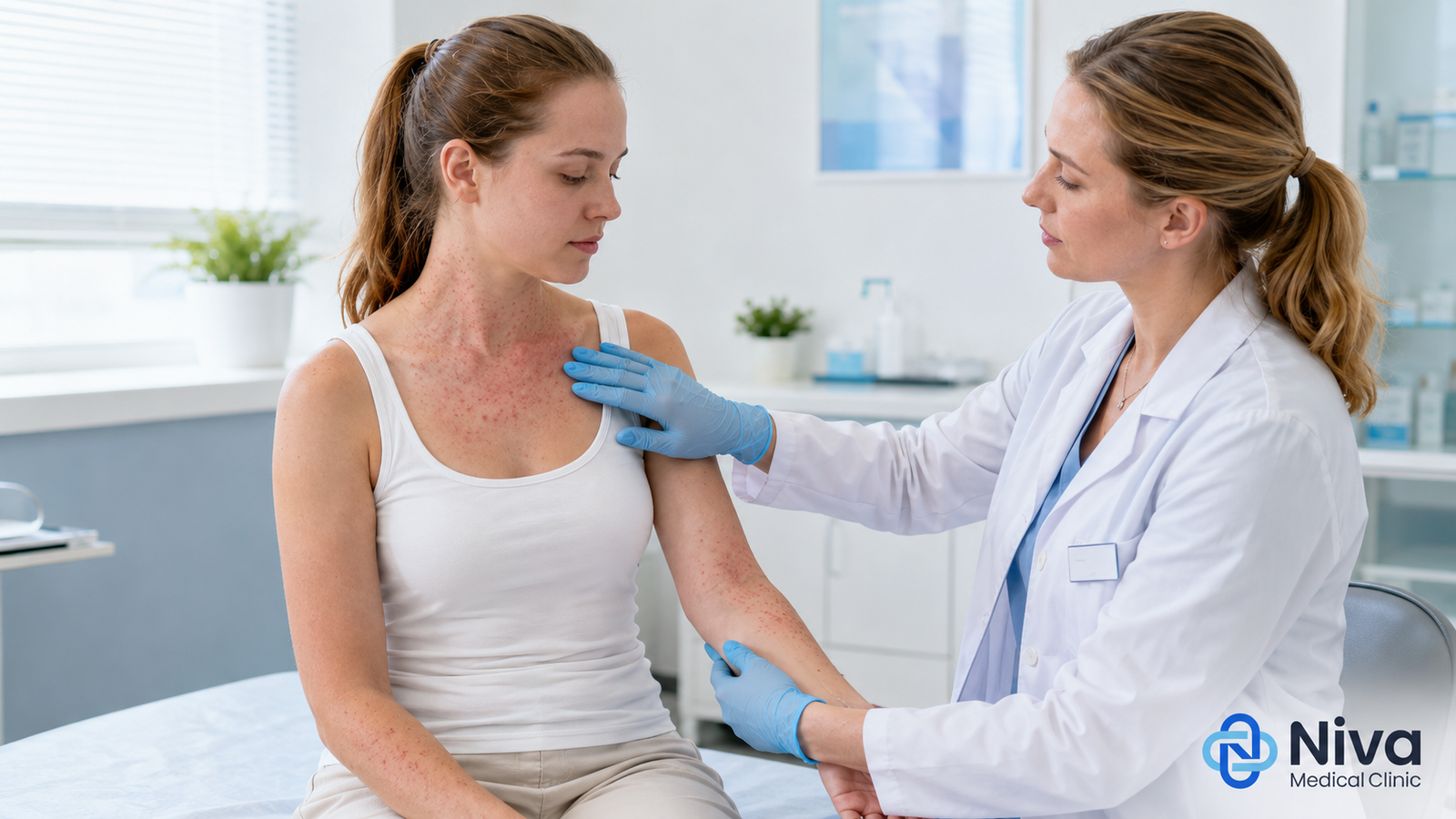
You should seek medical advice if a rash is spreading, painful, bleeding, infected, disturbing sleep or not improving with simple measures. You should also book an appointment if the rash keeps returning, affects your face or genitals, causes significant distress or appears alongside fever, joint pain or unexplained symptoms.
A private GP appointment can help identify whether the problem is likely to be eczema, psoriasis, rosacea, dermatitis, infection or another skin condition. Your doctor may ask about your symptoms, medical history, family history, allergies, skincare routine, work exposures, stress, medicines and triggers.
In many cases, a diagnosis can be made by examining the skin. Sometimes further tests, swabs, blood tests or referral to a dermatologist may be recommended.
How Are Eczema and Psoriasis Managed?
Eczema management usually focuses on repairing and protecting the skin barrier, reducing inflammation and identifying triggers. This may include regular emollients, soap substitutes, appropriate topical treatments and advice on avoiding irritants. When eczema is infected or severe, additional treatment may be needed.
Psoriasis treatment depends on the location, severity and impact of the condition. Mild psoriasis may be managed with topical treatments, moisturisers and scalp preparations where appropriate. More extensive or difficult psoriasis may require specialist dermatology input.
The right treatment depends on the correct diagnosis. A cream that helps one condition may not be suitable for another. This is why a proper medical review is valuable, particularly when symptoms are persistent or recurrent.
Why Choose Niva Medical Clinic?
Niva Medical Clinic provides private healthcare services for patients in North West London, including Private GP services, physiotherapy and psychological support. Our clinic is built around personalised, patient centred care, with a focus on accessible, continuous and preventative healthcare.
Skin conditions can affect confidence, sleep, work and day to day comfort. We take time to understand your symptoms, assess possible triggers and provide practical next steps. Where needed, we can also support broader health checks, blood tests, imaging services or referrals.
Our role is not only to treat the current flare up, but to help you understand what may be happening and how to manage your skin more effectively over time.
Book a Private GP Appointment at Niva Medical Clinic
If you are unsure whether your rash is eczema, psoriasis or another skin condition, book a private GP appointment with Niva Medical Clinic. Early assessment can help reduce discomfort, prevent symptoms from worsening and give you a clearer plan for managing your skin.
Contact Niva Medical Clinic today to arrange an appointment and receive personalised care from our experienced healthcare team.
FAQs
How do I know if I have eczema or psoriasis?
Eczema is usually intensely itchy and often appears in body creases such as behind the knees, inside the elbows, around the wrists or on the neck. Psoriasis often causes thicker, raised plaques with clearly defined edges and silvery or grey scales, commonly on the elbows, knees, scalp or lower back. A doctor can assess the rash and confirm the most likely diagnosis.
Can eczema and psoriasis look the same?
Yes, they can sometimes look similar, especially when the skin is dry, red, flaky or irritated. Some other conditions can also mimic them, including fungal infections, contact dermatitis and seborrhoeic dermatitis. If the rash is persistent, spreading or not responding to treatment, it is best to seek medical advice.
Is eczema contagious?
No. Eczema is not contagious. You cannot catch it from another person. It is linked to skin barrier sensitivity, inflammation and triggers such as irritants, allergens, weather changes and stress.
Is psoriasis contagious?
No. Psoriasis is not contagious. It is an inflammatory immune related condition and cannot be passed from person to person through touch.
What foods trigger eczema?
There is no single eczema diet that applies to everyone. Some people may notice flare ups linked to specific foods, especially if they have allergies, but many eczema flare ups are related to skin irritants, weather, stress or infections. You should not remove major food groups without medical advice.
What does early psoriasis look like?
Early psoriasis may start as small raised patches or bumps that become thicker and scaly over time. The patches may be pink, red, purple, brown or grey depending on skin tone, and they often develop on the elbows, knees, scalp or lower back.
When should I see a doctor for a skin rash?
You should see a doctor if the rash is painful, infected, bleeding, spreading, affecting sleep, recurring or not improving with basic skincare. You should also seek advice if you have joint pain, nail changes or a rash affecting sensitive areas such as the face or genitals.
Can Niva Medical Clinic help with eczema, psoriasis and skin rashes?
Yes. Niva Medical Clinic offers private GP appointments in North West London for common health concerns, including skin rashes and inflammatory skin conditions. Your clinician can assess your symptoms, discuss likely causes and recommend appropriate next steps.